

Your top news on CBD
Provided by AGP
Caustic Soda Production Plant Setup, Feasibility Study, ROI Analysis and Business Plan Consultant
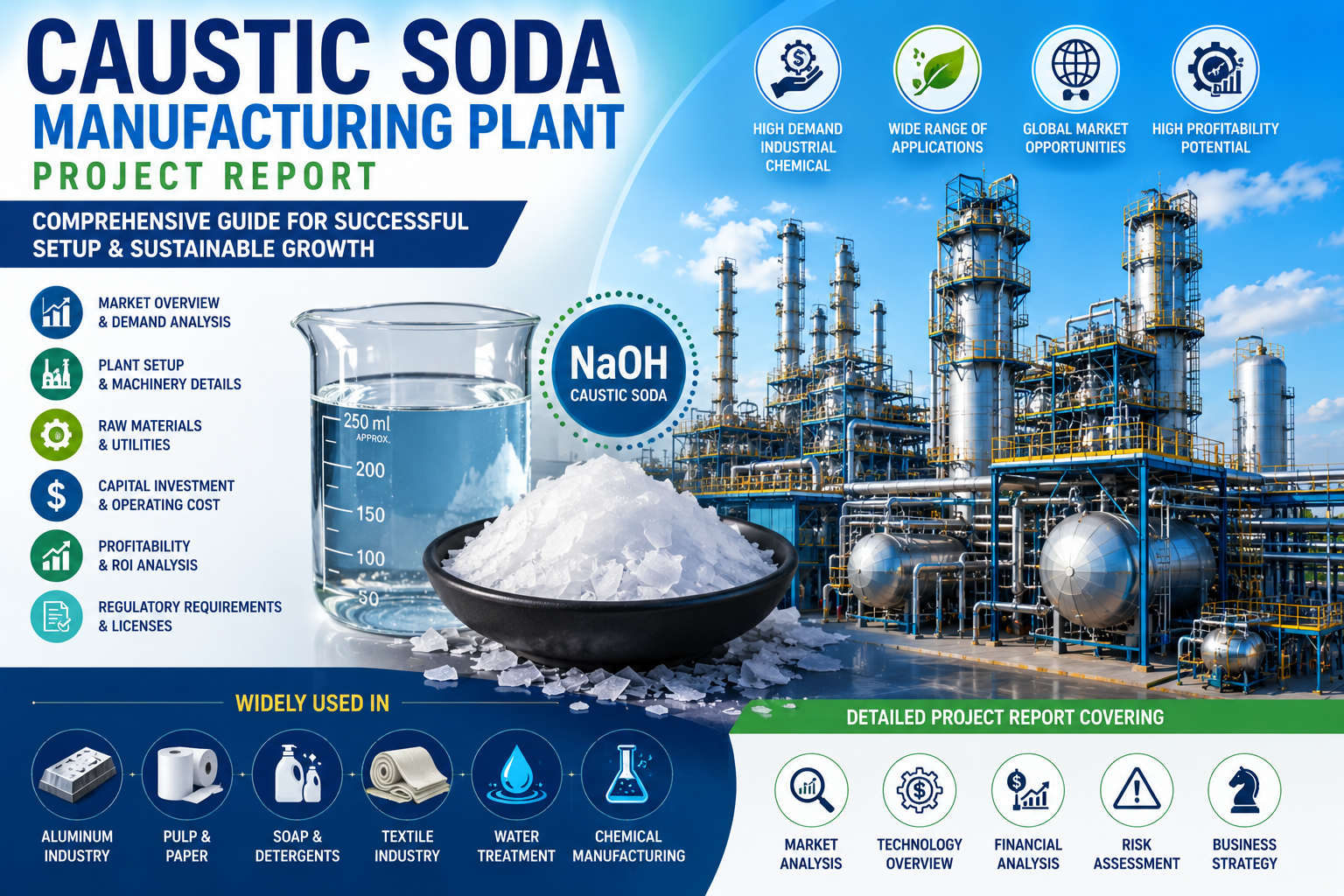
A Detailed DPR Covering CapEx, OpEx, Membrane Cell Electrolysis Process, ROI Analysis, Global Opportunity in Alumina, Pulp & Paper, and Chemical Manufacturing
BROOKLYN, NY, UNITED STATES, May 19, 2026 /EINPresswire.com/ -- Setting up a caustic soda production plant gives you entry into one of the most broadly consumed industrial chemicals in the world. Sodium hydroxide (NaOH) is an essential input across alumina refining, textile processing, pulp and paper bleaching, soap and detergent production, water treatment, and organic and inorganic chemical synthesis. Demand is structurally diversified across a dozen industries, meaning no single downturn concentrates revenue risk. The chlor-alkali plant setup also produces chlorine and hydrogen as co-products - both commercially valuable - which provides a revenue stream beyond caustic soda alone and improves overall plant economics.IMARC Group’s Caustic Soda Production Plant Project Report is a complete DPR and caustic soda production feasibility study for chemical manufacturers, investors, and project developers. It covers the full chlor-alkali plant setup - from brine preparation through membrane cell electrolysis, caustic concentration, chlorine processing, and hydrogen recovery - with complete caustic soda plant CapEx and OpEx modelling and 10-year financial projections.
𝐑𝐞𝐪𝐮𝐞𝐬𝐭 𝐟𝐨𝐫 𝐚 𝐒𝐚𝐦𝐩𝐥𝐞 𝐑𝐞𝐩𝐨𝐫𝐭: https://www.imarcgroup.com/caustic-soda-manufacturing-plant-project-report/requestsample
𝐈𝐧𝐯𝐞𝐬𝐭𝐦𝐞𝐧𝐭 𝐃𝐫𝐢𝐯𝐞𝐫𝐬 𝐚𝐧𝐝 𝐌𝐚𝐫𝐤𝐞𝐭 𝐎𝐩𝐩𝐨𝐫𝐭𝐮𝐧𝐢𝐭𝐲
Three forces are driving consistent caustic soda demand across industries:
𝐀𝐥𝐮𝐦𝐢𝐧𝐚 𝐚𝐧𝐝 𝐚𝐥𝐮𝐦𝐢𝐧𝐢𝐮𝐦 𝐩𝐫𝐨𝐝𝐮𝐜𝐭𝐢𝐨𝐧 𝐚𝐧𝐜𝐡𝐨𝐫𝐢𝐧𝐠 𝐛𝐚𝐬𝐞𝐥𝐨𝐚𝐝 𝐝𝐞𝐦𝐚𝐧𝐝: Caustic soda is indispensable in the Bayer process for extracting alumina from bauxite ore. Approximately 0.4-0.5 tonnes of NaOH are consumed per tonne of alumina produced. India’s aluminium industry - growing alongside EV battery infrastructure, aerospace, packaging, and construction - is the largest single caustic soda consuming segment domestically. Every new alumina refinery or capacity expansion creates a long-term, contracted caustic soda production stream.
𝐓𝐞𝐱𝐭𝐢𝐥𝐞, 𝐩𝐮𝐥𝐩 𝐚𝐧𝐝 𝐩𝐚𝐩𝐞𝐫, 𝐚𝐧𝐝 𝐬𝐨𝐚𝐩𝐬 𝐩𝐫𝐨𝐯𝐢𝐝𝐢𝐧𝐠 𝐝𝐢𝐯𝐞𝐫𝐬𝐢𝐟𝐢𝐞𝐝 𝐛𝐚𝐬𝐞𝐥𝐨𝐚𝐝: India’s textile industry is the world’s second largest by volume. Mercerization and scouring of cotton fabric, dyeing processes, and synthetic fibre production all consume caustic soda at scale. Pulp and paper mills use NaOH in kraft pulping and bleaching. Soap and detergent manufacturing uses caustic soda for saponification. These three industries alone provide a highly stable, multi-source demand foundation for any caustic soda production plant.
𝐖𝐚𝐭𝐞𝐫 𝐭𝐫𝐞𝐚𝐭𝐦𝐞𝐧𝐭 𝐢𝐧𝐟𝐫𝐚𝐬𝐭𝐫𝐮𝐜𝐭𝐮𝐫𝐞 𝐚𝐧𝐝 𝐜𝐡𝐞𝐦𝐢𝐜𝐚𝐥 𝐬𝐲𝐧𝐭𝐡𝐞𝐬𝐢𝐬 𝐜𝐫𝐞𝐚𝐭𝐢𝐧𝐠 𝐚𝐝𝐝𝐢𝐭𝐢𝐨𝐧𝐚𝐥 𝐝𝐞𝐦𝐚𝐧𝐝: India’s urban water treatment expansion, Clean Ganga Mission, and industrial effluent treatment mandates use caustic soda for pH adjustment and neutralisation. PVC manufacturing and organic chemical synthesis consume chlorine, the co-product of the chlor-alkali process, creating integrated chemical complex demand for full plant output. Hydrogen, the third co-product, is increasingly valuable as a clean energy feedstock.
𝐏𝐫𝐨𝐝𝐮𝐜𝐭 𝐅𝐨𝐫𝐦𝐬 𝐚𝐧𝐝 𝐂𝐨-𝐏𝐫𝐨𝐝𝐮𝐜𝐭 𝐑𝐞𝐯𝐞𝐧𝐮𝐞
A caustic soda production plant’s commercial output covers three co-products, each with independent markets:
• 𝐂𝐚𝐮𝐬𝐭𝐢𝐜 𝐬𝐨𝐝𝐚 𝐬𝐨𝐥𝐮𝐭𝐢𝐨𝐧 (𝟑𝟐-𝟑𝟓% 𝐍𝐚𝐎𝐇): The base product as it exits electrolysis. Supplied directly to nearby alumina, textile, or paper customers who can accept dilute liquid product. Lowest transport cost, highest water content.
• 𝐂𝐚𝐮𝐬𝐭𝐢𝐜 𝐬𝐨𝐝𝐚 𝐬𝐨𝐥𝐮𝐭𝐢𝐨𝐧 (𝟒𝟖-𝟓𝟎% 𝐍𝐚𝐎𝐇): Concentrated by multiple-effect evaporation during production. The standard commercial product for industrial supply. Most widely traded globally. A sodium hydroxide manufacturing plant targeting the broader industrial market typically supplies 50% liquid caustic.
• 𝐂𝐚𝐮𝐬𝐭𝐢𝐜 𝐬𝐨𝐝𝐚 𝐟𝐥𝐚𝐤𝐞𝐬 (𝟗𝟖-𝟗𝟗% 𝐍𝐚𝐎𝐇): Solid form produced by further evaporation and flaking. Preferred for export, long-distance transport, and customers requiring high-purity solid alkali (soap manufacturing, water treatment chemicals). Highest per-tonne value form of caustic soda.
• 𝐂𝐡𝐥𝐨𝐫𝐢𝐧𝐞 (𝐜𝐨-𝐩𝐫𝐨𝐝𝐮𝐜𝐭): Produced at the anode of each electrolytic cell. Liquefied for storage and transport. Primary markets: PVC production (via EDC/VCM route), water treatment, agrochemicals, and pharmaceutical synthesis. Chlorine revenue is essential to overall caustic soda plant ROI.
• 𝐇𝐲𝐝𝐫𝐨𝐠𝐞𝐧 (𝐜𝐨-𝐩𝐫𝐨𝐝𝐮𝐜𝐭): Produced at the cathode. High-purity electrolytic hydrogen. Can be used as boiler fuel within the plant, supplied to adjacent hydrogen peroxide producers, or - increasingly - compressed and sold as industrial or fuel-cell grade hydrogen. Hydrogen is gaining value as the green hydrogen economy develops.
𝐂𝐚𝐮𝐬𝐭𝐢𝐜 𝐒𝐨𝐝𝐚 𝐏𝐫𝐨𝐝𝐮𝐜𝐭𝐢𝐨𝐧 𝐏𝐥𝐚𝐧𝐭 𝐅𝐞𝐚𝐬𝐢𝐛𝐢𝐥𝐢𝐭𝐲 𝐑𝐞𝐩𝐨𝐫𝐭: https://www.imarcgroup.com/caustic-soda-manufacturing-plant-project-report
𝐇𝐨𝐰 𝐚 𝐂𝐚𝐮𝐬𝐭𝐢𝐜 𝐒𝐨𝐝𝐚 𝐏𝐫𝐨𝐝𝐮𝐜𝐭𝐢𝐨𝐧 𝐏𝐥𝐚𝐧𝐭 𝐖𝐨𝐫𝐤𝐬 - 𝐓𝐡𝐞 𝐌𝐞𝐦𝐛𝐫𝐚𝐧𝐞 𝐂𝐞𝐥𝐥 𝐄𝐥𝐞𝐜𝐭𝐫𝐨𝐥𝐲𝐬𝐢𝐬 𝐏𝐫𝐨𝐜𝐞𝐬𝐬
Over 95% of new chlor-alkali capacity globally uses the membrane cell process. Mercury cells are phased out globally; diaphragm cells are being replaced. India has fully transitioned to membrane cell technology, consuming approximately 2,150-2,200 kWh per tonne of NaOH produced:
• 𝐒𝐚𝐥𝐭 𝐩𝐫𝐨𝐜𝐮𝐫𝐞𝐦𝐞𝐧𝐭 𝐚𝐧𝐝 𝐛𝐫𝐢𝐧𝐞 𝐩𝐫𝐞𝐩𝐚𝐫𝐚𝐭𝐢𝐨𝐧: Rock salt or solar salt is dissolved in water to form saturated brine. A membrane cell caustic soda plant requires ultra-pure brine to protect the ion-exchange membrane from fouling. Brine purification removes calcium, magnesium, and sulphate ions through precipitation and ion exchange. Brine quality is the single most critical factor for membrane life and consistent production purity
• 𝐁𝐫𝐢𝐧𝐞 𝐬𝐚𝐭𝐮𝐫𝐚𝐭𝐢𝐨𝐧 𝐚𝐧𝐝 𝐝𝐞𝐜𝐡𝐥𝐨𝐫𝐢𝐧𝐚𝐭𝐢𝐨𝐧: Depleted brine returning from the anolyte loop is re-saturated with fresh salt and dechlorinated before re-entering the cell. Closed-loop brine management reduces salt and chemical consumption
• 𝐌𝐞𝐦𝐛𝐫𝐚𝐧𝐞 𝐜𝐞𝐥𝐥 𝐞𝐥𝐞𝐜𝐭𝐫𝐨𝐥𝐲𝐬𝐢𝐬: Purified brine enters the anode compartment of the bipolar membrane electrolyser. DC current drives the electrochemical reaction: chloride ions are oxidised to chlorine gas at the anode, and water is reduced to hydrogen gas and hydroxide ions at the cathode. The ion-exchange membrane allows Na⁺ ions to migrate from anolyte to catholyte while preventing Cl⁻ back-migration, producing high-purity caustic soda solution on the cathode side
• 𝐂𝐡𝐥𝐨𝐫𝐢𝐧𝐞 𝐠𝐚𝐬 𝐡𝐚𝐧𝐝𝐥𝐢𝐧𝐠: Wet chlorine gas exits the anode compartment, is cooled, dried with sulphuric acid, and either liquefied for storage and transport or directed to downstream derivatives production. Chlorine handling is the highest safety-criticality step in the plant
• 𝐂𝐚𝐮𝐬𝐭𝐢𝐜 𝐬𝐨𝐝𝐚 𝐜𝐨𝐧𝐜𝐞𝐧𝐭𝐫𝐚𝐭𝐢𝐨𝐧: The catholyte exits the cell as 30-35% NaOH solution. Multiple-effect evaporators (typically triple-effect) concentrate the solution to 50% NaOH. Further concentration to flake grade requires additional evaporation and a flaking drum or belt. Energy cost for evaporation is the primary driver of the 50-60% utility share of total OpEx
• 𝐇𝐲𝐝𝐫𝐨𝐠𝐞𝐧 𝐫𝐞𝐜𝐨𝐯𝐞𝐫𝐲: Hydrogen gas from the cathode compartment is collected, washed, compressed, and either used as plant fuel or purified to sellable grade. Clean electrolytic hydrogen with purity above 99.9% has growing commercial value
• 𝐐𝐮𝐚𝐥𝐢𝐭𝐲 𝐭𝐞𝐬𝐭𝐢𝐧𝐠 𝐚𝐧𝐝 𝐝𝐢𝐬𝐩𝐚𝐭𝐜𝐡: Caustic soda solution is tested for NaOH concentration, NaCl content, iron, and carbonate. Product is dispatched in road tankers (liquid) or packed in bags or drums (flakes/solid). Caustic soda production unit cost is determined by electricity tariff, salt cost, and membrane replacement frequency
𝐏𝐥𝐚𝐧𝐭 𝐈𝐧𝐯𝐞𝐬𝐭𝐦𝐞𝐧𝐭 𝐄𝐜𝐨𝐧𝐨𝐦𝐢𝐜𝐬
𝐏𝐫𝐨𝐝𝐮𝐜𝐭𝐢𝐨𝐧 𝐂𝐚𝐩𝐚𝐜𝐢𝐭𝐲:
• The proposed production facility is designed with an annual production capacity ranging between 100,000 - 300,000 MT, enabling economies of scale while maintaining operational flexibility
𝐏𝐫𝐨𝐟𝐢𝐭𝐚𝐛𝐢𝐥𝐢𝐭𝐲 𝐁𝐞𝐧𝐜𝐡𝐦𝐚𝐫𝐤𝐬:
• 𝐆𝐫𝐨𝐬𝐬 𝐏𝐫𝐨𝐟𝐢𝐭: 25-35%
• 𝐍𝐞𝐭 𝐏𝐫𝐨𝐟𝐢𝐭: 10-20% after financing costs, depreciation, and taxes
𝐎𝐩𝐞𝐫𝐚𝐭𝐢𝐧𝐠 𝐂𝐨𝐬𝐭 (𝐎𝐩𝐄𝐱) 𝐁𝐫𝐞𝐚𝐤𝐝𝐨𝐰𝐧:
• 𝐔𝐭𝐢𝐥𝐢𝐭𝐢𝐞𝐬: 50-60% of total OpEx - electrolysis at 2,150-2,200 kWh per tonne of NaOH makes this one of the most electricity-intensive chemical processes in industry
• 𝐑𝐚𝐰 𝐌𝐚𝐭𝐞𝐫𝐢𝐚𝐥𝐬 (𝐬𝐚𝐥𝐭/𝐍𝐚𝐂𝐥 𝐛𝐫𝐢𝐧𝐞): 30-40% of OpEx
𝐂𝐚𝐮𝐬𝐭𝐢𝐜 𝐒𝐨𝐝𝐚 𝐏𝐥𝐚𝐧𝐭 𝐂𝐚𝐩𝐄𝐱 𝐂𝐨𝐦𝐩𝐨𝐧𝐞𝐧𝐭𝐬:
• 𝐋𝐚𝐧𝐝 𝐚𝐧𝐝 𝐟𝐚𝐜𝐭𝐨𝐫𝐲: electrolysis hall, brine plant, chlorine handling area, caustic evaporation unit, hydrogen recovery system, storage tanks, safety exclusion zones
• 𝐂𝐨𝐫𝐞 𝐩𝐫𝐨𝐜𝐞𝐬𝐬 𝐞𝐪𝐮𝐢𝐩𝐦𝐞𝐧𝐭: bipolar membrane electrolysers, brine purification plant, multiple-effect evaporators, chlorine liquefaction unit, hydrogen compression system
• 𝐒𝐚𝐟𝐞𝐭𝐲 𝐚𝐧𝐝 𝐞𝐧𝐯𝐢𝐫𝐨𝐧𝐦𝐞𝐧𝐭𝐚𝐥 𝐬𝐲𝐬𝐭𝐞𝐦𝐬: chlorine emergency scrubbers, explosion-proof electrical installation throughout hydrogen zones, caustic handling lined piping and vessels, effluent treatment
• 𝐔𝐭𝐢𝐥𝐢𝐭𝐢𝐞𝐬: high-capacity rectifier/transformer for DC supply (the single largest CapEx component), steam supply for evaporation, cooling water system
• 𝐏𝐫𝐞-𝐨𝐩𝐞𝐫𝐚𝐭𝐢𝐯𝐞 𝐜𝐨𝐬𝐭𝐬: electrolyser commissioning, membrane qualification, operator training, and initial working capital including salt inventory
𝐒𝐩𝐞𝐚𝐤 𝐭𝐨 𝐀𝐧𝐚𝐥𝐲𝐬𝐭 𝐟𝐨𝐫 𝐂𝐮𝐬𝐭𝐨𝐦𝐢𝐳𝐞𝐝 𝐑𝐞𝐩𝐨𝐫𝐭: https://www.imarcgroup.com/request?type=report&id=9091&flag=C
𝐆𝐥𝐨𝐛𝐚𝐥 𝐌𝐚𝐫𝐤𝐞𝐭 𝐚𝐧𝐝 𝐑𝐞𝐠𝐢𝐨𝐧𝐚𝐥 𝐃𝐞𝐦𝐚𝐧𝐝
The global caustic soda market reached 84.37 million tons in 2025 and is projected to reach 95.70 million tons by 2034 at a CAGR of 1.4%. Asia Pacific holds the dominant share at approximately 55% of global consumption, driven by China’s massive alumina, chemical, and textile industries.
𝐂𝐡𝐢𝐧𝐚: The world’s largest producer and consumer of caustic soda. China’s alumina, PVC, and textile industries are the dominant demand anchors. China’s push for membrane cell technology adoption and renewable energy integration in chlor-alkali production is reshaping global technology standards.
𝐔𝐧𝐢𝐭𝐞𝐝 𝐒𝐭𝐚𝐭𝐞𝐬 𝐚𝐧𝐝 𝐄𝐮𝐫𝐨𝐩𝐞: Mature markets with stable demand from chemical, pulp and paper, and water treatment sectors. The US and EU are upgrading aging mercury and diaphragm cell facilities to membrane cell technology under regulatory pressure. OxyVinyls announced a USD 1.1 billion expansion at its La Porte, Texas chlor-alkali plant. INEOS Inovyn launched an Ultra Low Carbon Chlor-Alkali range (February 2024) cutting CO₂ footprint by up to 70%.
𝐒𝐨𝐮𝐭𝐡𝐞𝐚𝐬𝐭 𝐀𝐬𝐢𝐚 𝐚𝐧𝐝 𝐌𝐢𝐝𝐝𝐥𝐞 𝐄𝐚𝐬𝐭: Rapid industrial expansion is creating greenfield caustic soda demand. In 2025, Chandra Asri launched a joint venture in Indonesia to build a world-scale caustic soda and EDC plant, targeting completion by 2027. The Middle East is expanding downstream petrochemical chains that consume caustic soda for chemical synthesis.
𝐈𝐧𝐝𝐢𝐚: The India caustic soda market reached 2.8 million tons in 2025 and is projected to reach 4.1 million tons by 2034 at a CAGR of 3.98%. India’s installed capacity is approximately 6.4 million MTPA - 100% membrane cell technology. FY 2024-25 production reached 5.05 million MT at approximately 80% utilisation. Gujarat’s West Zone - centred on Dahej, Bharuch, and Gandhidham - is India’s primary chlor-alkali hub, benefiting from proximity to the Rann of Kutch salt flats and Gujarat’s industrial port infrastructure. Key producers include Grasim Industries, DCM Shriram, GACL, Epigral, Kutch Chemicals, and Tata Chemicals.
𝐒𝐢𝐭𝐞 𝐒𝐞𝐥𝐞𝐜𝐭𝐢𝐨𝐧 𝐚𝐧𝐝 𝐏𝐨𝐥𝐢𝐜𝐲 𝐒𝐮𝐩𝐩𝐨𝐫𝐭
Location decisions for a caustic soda manufacturing plant setup directly affect electricity cost, salt procurement, and product logistics:
• 𝐏𝐨𝐰𝐞𝐫 𝐬𝐮𝐩𝐩𝐥𝐲 𝐚𝐧𝐝 𝐞𝐥𝐞𝐜𝐭𝐫𝐢𝐜𝐢𝐭𝐲 𝐭𝐚𝐫𝐢𝐟𝐟: Electricity at 2,150-2,200 kWh per MT of NaOH means power cost is the single largest operational variable. Sites with access to long-term power purchase agreements, captive power capacity, or renewable energy supply significantly improve caustic soda plant OpEx and overall competitiveness
• 𝐒𝐚𝐥𝐭 𝐚𝐯𝐚𝐢𝐥𝐚𝐛𝐢𝐥𝐢𝐭𝐲 𝐚𝐧𝐝 𝐛𝐫𝐢𝐧𝐞 𝐞𝐜𝐨𝐧𝐨𝐦𝐢𝐜𝐬: Solar salt and rock salt are the primary feedstocks. Proximity to the Rann of Kutch (India’s largest salt flat), coastal salt works in Rajasthan, Gujarat, or Tamil Nadu minimises inbound raw material cost. On-site brine wells are used where subsurface salt deposits are available, enabling on-site production of saturated brine
• 𝐂𝐡𝐥𝐨𝐫𝐢𝐧𝐞 𝐚𝐧𝐝 𝐡𝐲𝐝𝐫𝐨𝐠𝐞𝐧 𝐜𝐨-𝐩𝐫𝐨𝐝𝐮𝐜𝐭 𝐦𝐚𝐫𝐤𝐞𝐭 𝐚𝐜𝐜𝐞𝐬𝐬: Chlorine offtake is critical to plant economics. A PVC, EDC, or water treatment chemical customer within pipeline distance converts the chlorine co-product from a liability into a production revenue stream. Hydrogen co-product value increases with proximity to hydrogen peroxide producers or hydrogen energy users
• 𝐏𝐨𝐫𝐭 𝐚𝐧𝐝 𝐛𝐮𝐥𝐤 𝐜𝐡𝐞𝐦𝐢𝐜𝐚𝐥𝐬 𝐢𝐧𝐟𝐫𝐚𝐬𝐭𝐫𝐮𝐜𝐭𝐮𝐫𝐞: Caustic soda is exported as 50% liquid in ISO tankers or as solid flakes. Sites near major chemical export ports (Mundra, Dahej, Hazira, Kandla) reduce export logistics cost and improve access to global buyers
• 𝐆𝐨𝐯𝐞𝐫𝐧𝐦𝐞𝐧𝐭 𝐢𝐧𝐜𝐞𝐧𝐭𝐢𝐯𝐞𝐬: India - PCPIR (Petroleum, Chemicals and Petrochemicals Investment Region) incentives for large chlor-alkali investments in Gujarat, Andhra Pradesh, and Odisha; National Programme on Use of Membrane Cells providing tax credits for technology upgrades; state power subsidies in Gujarat for industrial units. EU - carbon border adjustment benefits for low-emission membrane cell producers
𝐑𝐞𝐩𝐨𝐫𝐭 𝐂𝐨𝐯𝐞𝐫𝐚𝐠𝐞
IMARC Group’s Caustic Soda Plant Project Report is a complete caustic soda production business plan and technical reference:
• 𝐅𝐮𝐥𝐥 𝐩𝐫𝐨𝐜𝐞𝐬𝐬 𝐟𝐥𝐨𝐰 𝐰𝐢𝐭𝐡 𝐦𝐚𝐬𝐬 𝐛𝐚𝐥𝐚𝐧𝐜𝐞: from brine preparation through membrane cell electrolysis, caustic concentration, chlorine processing, hydrogen recovery, and dispatch
• 𝐂𝐚𝐮𝐬𝐭𝐢𝐜 𝐬𝐨𝐝𝐚 𝐩𝐥𝐚𝐧𝐭 𝐂𝐚𝐩𝐄𝐱 𝐛𝐫𝐞𝐚𝐤𝐝𝐨𝐰𝐧: electrolysers, rectifier/transformer, brine plant, evaporators, chlorine liquefaction, hydrogen system, and safety infrastructure
• 𝟏𝟎-𝐲𝐞𝐚𝐫 𝐎𝐩𝐄𝐱 𝐩𝐫𝐨𝐣𝐞𝐜𝐭𝐢𝐨𝐧𝐬: electricity, salt, membrane replacement, utilities, labour, maintenance
• 𝐅𝐢𝐧𝐚𝐧𝐜𝐢𝐚𝐥 𝐦𝐨𝐝𝐞𝐥: caustic soda plant ROI, IRR, NPV, DSCR, break-even, and sensitivity tables across electricity tariff and chlorine/caustic price scenarios
• 𝐂𝐨-𝐩𝐫𝐨𝐝𝐮𝐜𝐭 𝐬𝐭𝐫𝐚𝐭𝐞𝐠𝐲: chlorine disposition options (liquid chlorine, HCl, hypochlorite, EDC) and hydrogen monetisation options - plant economics optimisation
• 𝐏𝐫𝐨𝐝𝐮𝐜𝐭 𝐦𝐢𝐱 𝐬𝐭𝐫𝐚𝐭𝐞𝐠𝐲: liquid 50% versus flakes versus membrane cell caustic soda plant configuration comparison
• 𝐂𝐚𝐮𝐬𝐭𝐢𝐜 𝐬𝐨𝐝𝐚 𝐩𝐥𝐚𝐧𝐭 𝐬𝐞𝐭𝐮𝐩 𝐜𝐨𝐬𝐭 𝐛𝐞𝐧𝐜𝐡𝐦𝐚𝐫𝐤𝐢𝐧𝐠: across 100,000, 200,000, and 300,000 MT/year configurations
• 𝐑𝐞𝐠𝐮𝐥𝐚𝐭𝐨𝐫𝐲 𝐜𝐨𝐦𝐩𝐥𝐢𝐚𝐧𝐜𝐞: PESO authorisation for chlorine storage, MSIHC Rules, Factories Act approvals, chlorine emergency response planning, PCB consent
The report is built for chemical industry investors evaluating a caustic soda plant investment, aluminium and alumina companies evaluating backward integration into NaOH supply, PVC and EDC manufacturers evaluating co-location with chlor-alkali, and banks requiring a bankable caustic soda production feasibility study for project financing.
𝐁𝐫𝐨𝐰𝐬𝐞 𝐌𝐨𝐫𝐞 𝐅𝐞𝐚𝐬𝐢𝐛𝐢𝐥𝐢𝐭𝐲 𝐒𝐭𝐮𝐝𝐲 𝐚𝐧𝐝 𝐁𝐮𝐬𝐢𝐧𝐞𝐬𝐬 𝐏𝐥𝐚𝐧 𝐑𝐞𝐩𝐨𝐫𝐭𝐬 𝐛𝐲 𝐈𝐌𝐀𝐑𝐂 𝐆𝐫𝐨𝐮𝐩:
𝐅𝐢𝐬𝐡 𝐌𝐞𝐚𝐥 𝐌𝐚𝐧𝐮𝐟𝐚𝐜𝐭𝐮𝐫𝐢𝐧𝐠 𝐏𝐥𝐚𝐧𝐭 𝐏𝐫𝐨𝐣𝐞𝐜𝐭 𝐑𝐞𝐩𝐨𝐫𝐭: https://www.imarcgroup.com/fish-meal-manufacturing-plant-project-report
𝐆𝐲𝐩𝐬𝐮𝐦 𝐁𝐨𝐚𝐫𝐝 𝐌𝐚𝐧𝐮𝐟𝐚𝐜𝐭𝐮𝐫𝐢𝐧𝐠 𝐏𝐥𝐚𝐧𝐭 𝐏𝐫𝐨𝐣𝐞𝐜𝐭 𝐑𝐞𝐩𝐨𝐫𝐭: https://www.imarcgroup.com/gypsum-board-manufacturing-plant-project-report
𝐇𝐞𝐦𝐩 𝐏𝐫𝐨𝐜𝐞𝐬𝐬𝐢𝐧𝐠 𝐏𝐥𝐚𝐧𝐭 𝐏𝐫𝐨𝐣𝐞𝐜𝐭 𝐑𝐞𝐩𝐨𝐫𝐭: https://www.imarcgroup.com/hemp-processing-plant-project-report
𝐉𝐮𝐧𝐜𝐭𝐢𝐨𝐧 𝐁𝐨𝐱 𝐌𝐚𝐧𝐮𝐟𝐚𝐜𝐭𝐮𝐫𝐢𝐧𝐠 𝐏𝐥𝐚𝐧𝐭 𝐏𝐫𝐨𝐣𝐞𝐜𝐭 𝐑𝐞𝐩𝐨𝐫𝐭: https://www.imarcgroup.com/junction-box-manufacturing-plant-project-report
𝐊𝐢𝐭𝐜𝐡𝐞𝐧 𝐀𝐩𝐩𝐥𝐢𝐚𝐧𝐜𝐞𝐬 𝐌𝐚𝐧𝐮𝐟𝐚𝐜𝐭𝐮𝐫𝐢𝐧𝐠 𝐏𝐥𝐚𝐧𝐭 𝐏𝐫𝐨𝐣𝐞𝐜𝐭 𝐑𝐞𝐩𝐨𝐫𝐭: https://www.imarcgroup.com/kitchen-appliances-manufacturing-plant-project-report
𝐂𝐨𝐩𝐩𝐞𝐫 𝐖𝐢𝐫𝐞 𝐌𝐚𝐧𝐮𝐟𝐚𝐜𝐭𝐮𝐫𝐢𝐧𝐠 𝐏𝐥𝐚𝐧𝐭 𝐏𝐫𝐨𝐣𝐞𝐜𝐭 𝐑𝐞𝐩𝐨𝐫𝐭: https://www.imarcgroup.com/copper-wire-manufacturing-plant-project-report
𝐀𝐢𝐫 𝐂𝐨𝐨𝐥𝐞𝐫 𝐌𝐚𝐧𝐮𝐟𝐚𝐜𝐭𝐮𝐫𝐢𝐧𝐠 𝐏𝐥𝐚𝐧𝐭 𝐏𝐫𝐨𝐣𝐞𝐜𝐭 𝐑𝐞𝐩𝐨𝐫𝐭: https://www.imarcgroup.com/air-cooler-manufacturing-plant-project-report
𝐀𝐲𝐮𝐫𝐯𝐞𝐝𝐢𝐜 𝐌𝐞𝐝𝐢𝐜𝐢𝐧𝐞 𝐌𝐚𝐧𝐮𝐟𝐚𝐜𝐭𝐮𝐫𝐢𝐧𝐠 𝐏𝐥𝐚𝐧𝐭 𝐏𝐫𝐨𝐣𝐞𝐜𝐭 𝐑𝐞𝐩𝐨𝐫𝐭: https://www.imarcgroup.com/ayurvedic-medicine-manufacturing-plant-project-report
𝐁𝐚𝐦𝐛𝐨𝐨 𝐅𝐢𝐛𝐞𝐫 𝐌𝐚𝐧𝐮𝐟𝐚𝐜𝐭𝐮𝐫𝐢𝐧𝐠 𝐏𝐥𝐚𝐧𝐭 𝐏𝐫𝐨𝐣𝐞𝐜𝐭 𝐑𝐞𝐩𝐨𝐫𝐭: https://www.imarcgroup.com/bamboo-fiber-manufacturing-plant-project-report
𝐁𝐢𝐧𝐝𝐢𝐧𝐠 𝐖𝐢𝐫𝐞 𝐏𝐫𝐨𝐝𝐮𝐜𝐭𝐢𝐨𝐧 𝐏𝐥𝐚𝐧𝐭 𝐏𝐫𝐨𝐣𝐞𝐜𝐭 𝐑𝐞𝐩𝐨𝐫𝐭: https://www.imarcgroup.com/binding-wire-manufacturing-plant-project-report
𝐀𝐛𝐨𝐮𝐭 𝐈𝐌𝐀𝐑𝐂 𝐆𝐫𝐨𝐮𝐩
IMARC Group is a global market research and management consulting firm. Its plant setup and DPR practice serves investors, developers, government agencies, and banks across 50+ countries, delivering reports used for loan documentation, investment approvals, and engineering planning.
Elena Anderson
IMARC Services Private Limited
+ +1 201-971-6302
email us here
Legal Disclaimer:
EIN Presswire provides this news content "as is" without warranty of any kind. We do not accept any responsibility or liability for the accuracy, content, images, videos, licenses, completeness, legality, or reliability of the information contained in this article. If you have any complaints or copyright issues related to this article, kindly contact the author above.
